
NETENGINE
From Ignored to Interviewed
Fix the resume that’s getting you filtered out and start getting interviews this week.
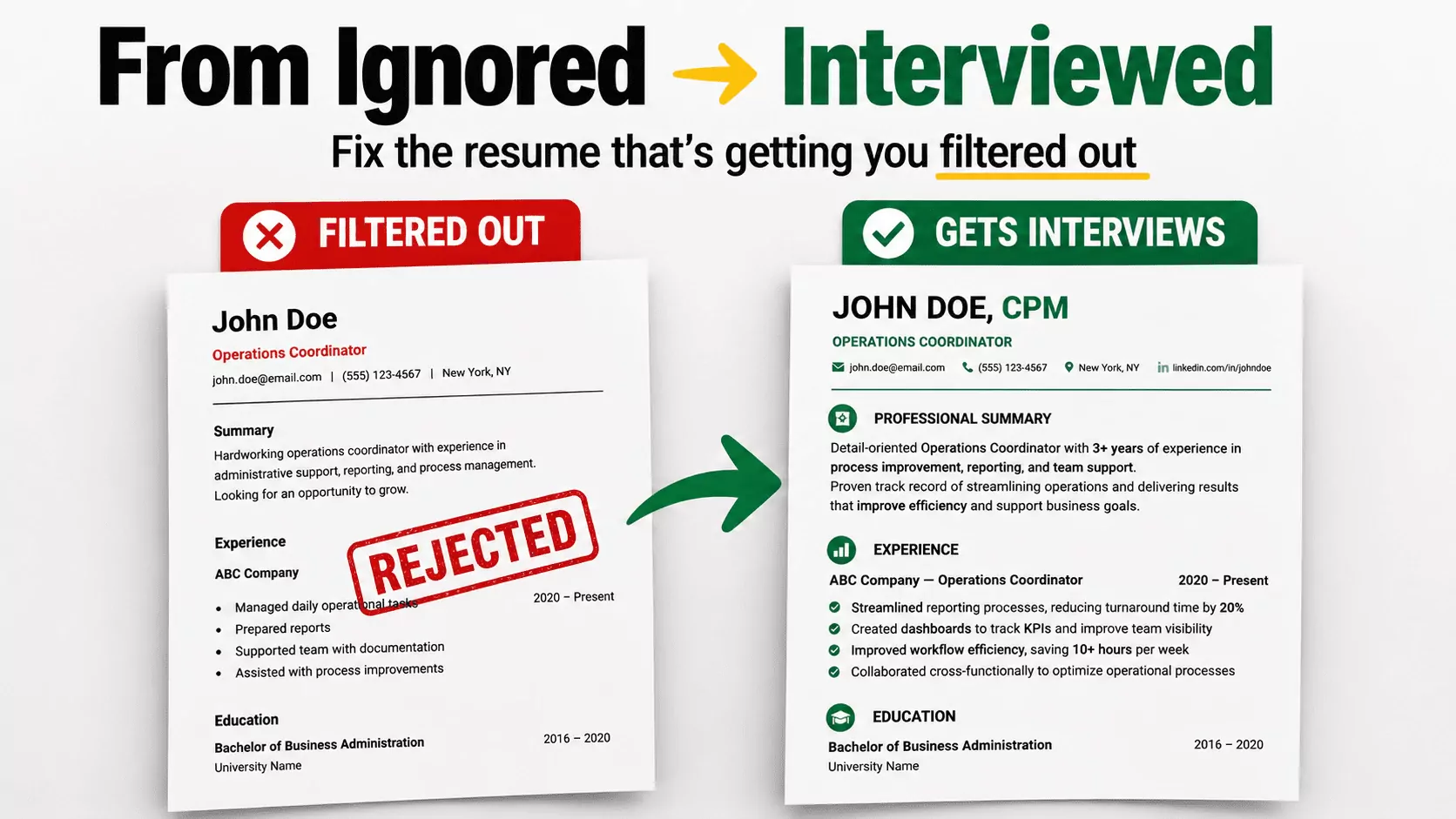
Applied to 50+ jobs
and heard nothing back?
Your resume isn’t broken.
It’s being filtered out.
Built for real job applications — not theory
Used by job seekers applying right now
Works with any job description
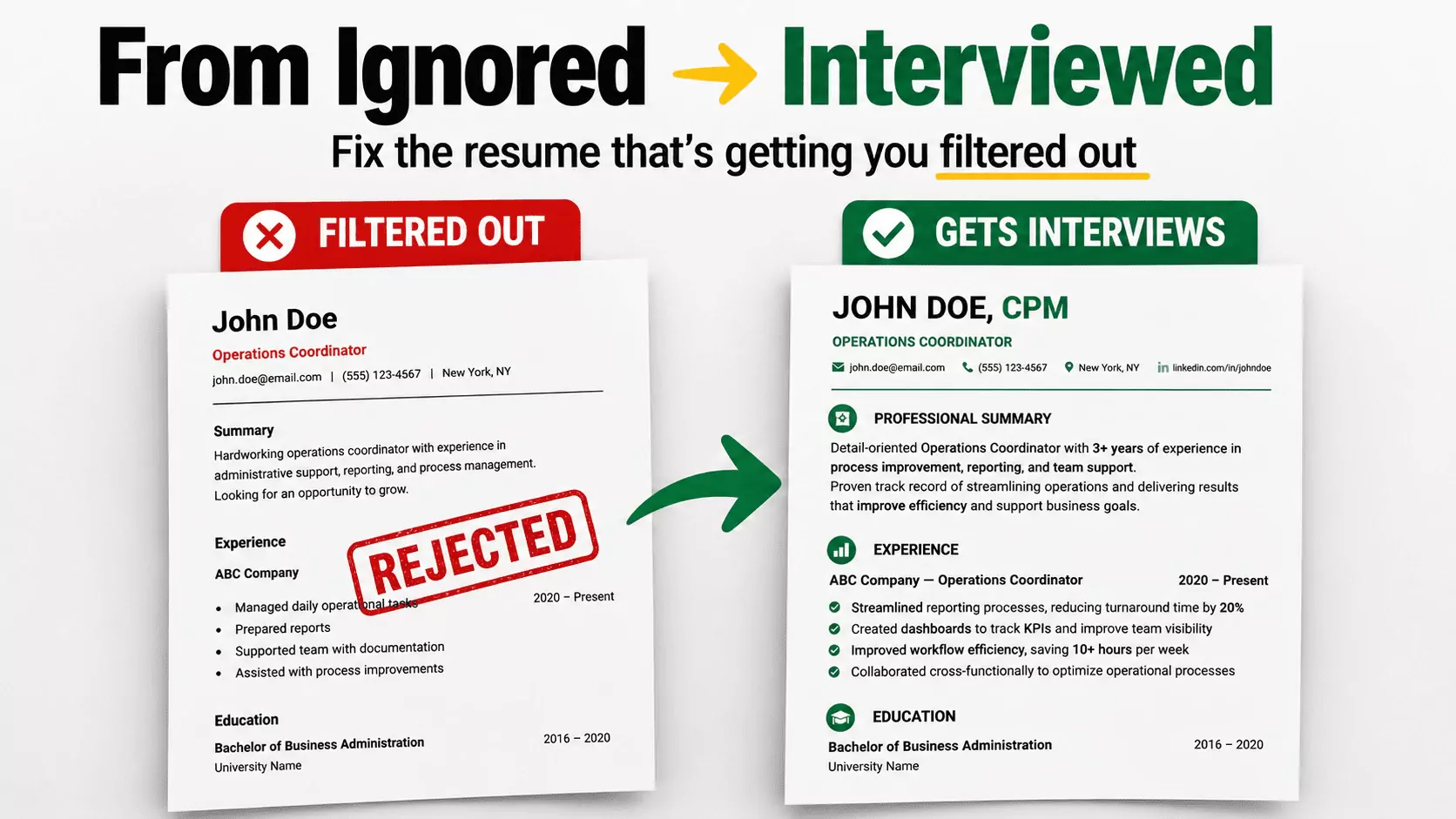
Why You’re Not Getting Interviews (Even If You’re Qualified)
Most people assume the problem is experience.
They think:
- “I need more skills”
- “I need a better background”
- “I need to apply to more jobs”
But that’s not what’s actually happening.
Before a human ever sees your resume…
It’s scanned and scored by software.
These systems are designed to filter out candidates
based on how well their resume matches the job description.
If your resume doesn’t match what the system is looking for:
- It doesn’t get seen
- It doesn’t get considered
- It doesn’t get a response
Even if you’re qualified.
These systems aren’t reading your resume like a person.
They’re scanning for:
- specific keywords
- specific structure
- specific signals tied to the job
If those aren’t there…
You’re filtered out instantly.
That’s why applying to more jobs doesn’t fix the problem.
And why rewriting your resume from scratch every time
just wastes time.
Because the issue isn’t effort.
It’s alignment.
Real Example
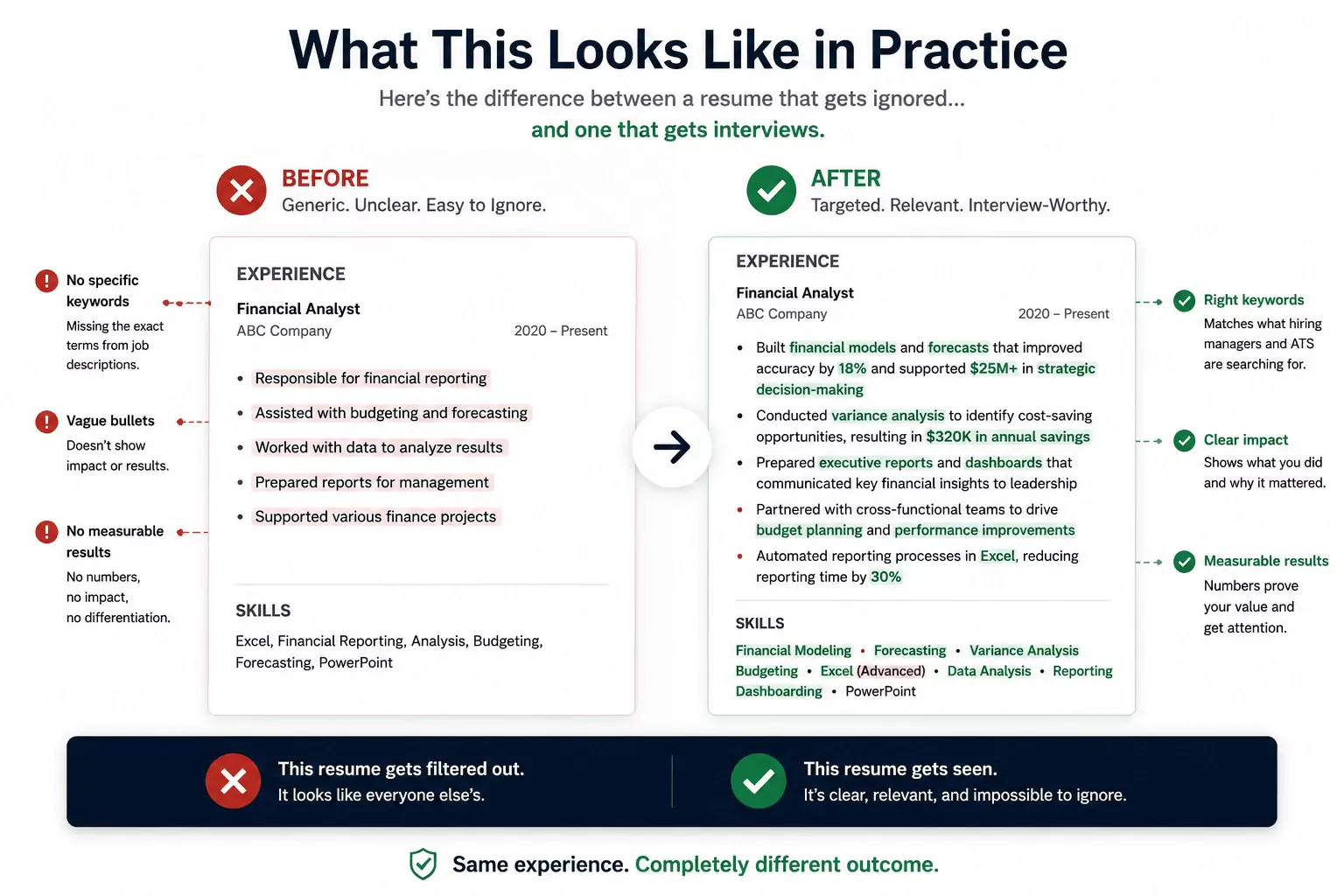
The Simple System That Gets Your Resume Seen (and Gets You Interviews)
Once you understand how resumes are actually being filtered…
The fix becomes straightforward.
You don’t need to:
- rewrite everything from scratch
- apply to hundreds of jobs
- guess what employers want
You just need a system that aligns your resume
with how these filters actually work.
The Interview Breakthrough System
A simple 3-step process:
Step 1: Match the Job Description
Instead of guessing what to include…
You pull the exact keywords and requirements
directly from the job posting.
This ensures your resume matches
what the system is scanning for.
Step 2: Align Your Resume
Next, you position your experience
to reflect those exact requirements.
Not by lying or exaggerating—
But by presenting what you’ve already done
in a way that actually gets recognized.
Step 3: Optimize for Interviews
Finally, you structure your resume
so it’s clear, readable, and easy to say “yes” to.
Because once you pass the filters…
A real person is reviewing it.
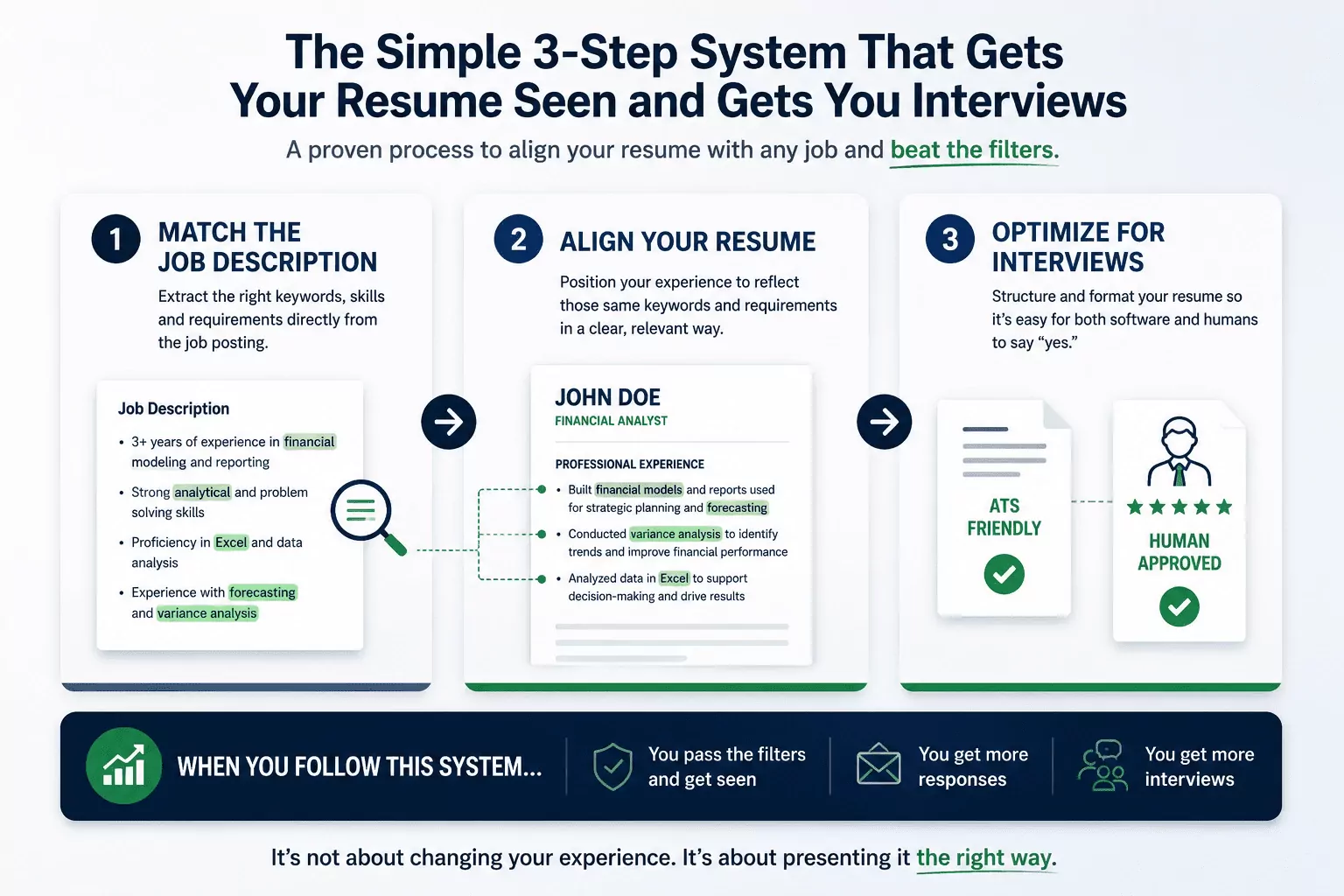
When you follow this process…
Your resume stops getting filtered out.
And starts getting responses.
Not because you changed your experience.
But because you changed how it’s being read.
This is the difference between being ignored…
and getting interviews.
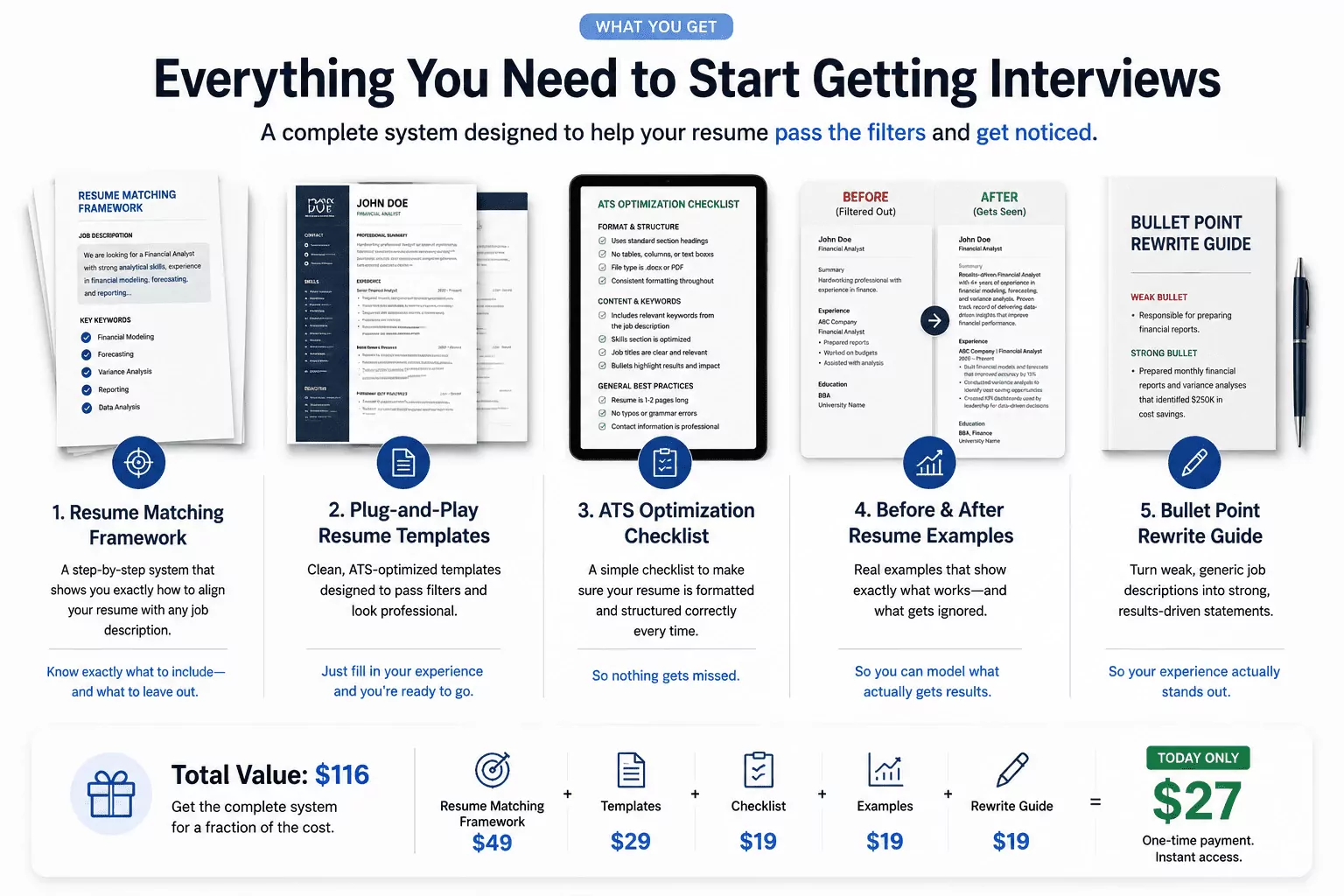
Everything You Need
to Start Getting Interviews
No guesswork. No rewriting from scratch.
Just a simple system you can apply immediately.
Inside The Interview Breakthrough Kit:
✔ Resume Matching Framework
A step-by-step system that shows you exactly how to align your resume with any job description.
So you know what to include—and what to leave out.
✔ Plug-and-Play Resume Templates
Clean, ATS-optimized templates designed to pass filters and look professional.
Just fill in your experience and you’re ready to go.
✔ ATS Optimization Checklist
A simple checklist to make sure your resume is formatted and structured correctly every time.
So nothing gets missed.
✔ Before & After Resume Examples
Real examples that show exactly what works—and what gets ignored.
So you can model what actually gets results.
✔ Bullet Point Rewrite Guide
Turn weak, generic job descriptions into strong, results-driven statements.
So your experience actually stands out.
This isn’t another resume guide.
It’s a system you can use every time you apply.
- Resume Matching Framework — $49
- Templates — $29
- Checklist — $19
- Examples — $19
Total Value: $116
Today: $27
You don’t need to:
- learn everything about resumes
- spend hours rewriting
- guess what employers want
You just follow the system.
If you’re tired of applying and hearing nothing back…
This is the fix.
Get The Interview Breakthrough Kit Now
What Happens When Your Resume Actually Matches
When your resume is aligned correctly…
You don’t need to apply to 100 jobs.
You start seeing:
- Responses within days instead of silence
- Recruiters actually reaching out
- Interview requests from roles you already applied to
Because now your resume is:
✔ Passing the filters
✔ Getting seen
✔ Being understood
And that changes everything.
Same experience. Different results.
Based on how hiring systems actually scan resumes
Try It Risk-Free
You don’t need to guess if this will work for you.
Try it.
Use the system.
Apply it to your resume.
See the difference for yourself.
If you don’t feel more confident about your resume within 7 days…
Just ask for a refund.
No questions.
No hassle.
Right now, this is priced at $27 while I’m validating and collecting feedback.
As more people start using it and getting results, the price will increase.
If you’ve been stuck applying and hearing nothing back…
There’s no reason to keep doing the same thing.
Fix the resume that’s getting you filtered out—
and start getting interviews.
Built based on how real hiring systems scan resumes
Every application you send without fixing this…
is another missed opportunity.
Sub Headline Goes Here

60-Day Risk-Free Guarantee
60-Day Risk-Free Guarantee
Try it.
Apply the system to your next 10–20 applications.
If you don’t see an improvement in response rate — you get your money back.
No risk.
FAQ
Do I need to be a financial analyst for this to work?
This guide is designed specifically for financial analysts and similar corporate roles where ATS filtering is heavily used.
Will this work if I’m not getting any responses at all?
Yes. That’s exactly who this is for.
If you’re getting zero responses, it usually means your resume isn’t making it past the initial filter.
Do I need to rewrite my resume from scratch?
No.
You’ll learn how to make targeted changes in 10–15 minutes per application.
Is this just generic resume advice?
No.
This focuses specifically on how resumes are evaluated by hiring systems—not general tips.
How quickly will I see results?
Most people should start seeing improved response rates within their next 10–20 applications—if the system is applied correctly.
What if this doesn’t work for me?
You’re covered by a 60-day refund.
If you don’t see improvement, you can request a full refund.